
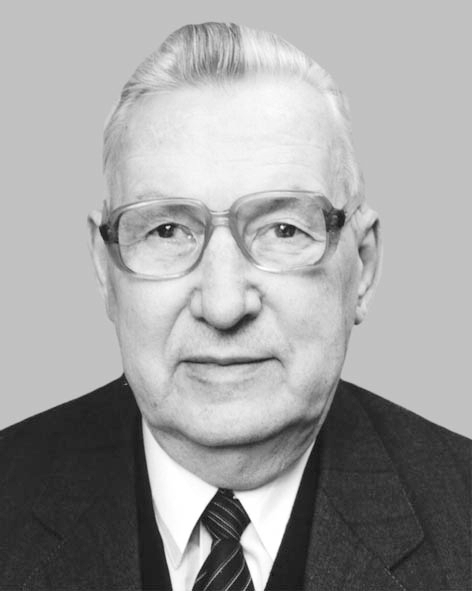
Oleksandr Lopukhov
Oleksandr Lopukhov biography
Oleksandr Lopukhov was a prominent Ukrainian artist and a laureate of the Shevchenko National Prize (1980). Originally from the Chernihiv region, he frequently drew inspiration from Ukrainian history for his works.
Summary of Oleksandr Lopukhov
The artist's creative legacy includes hundreds of canvases: still lifes, portraits, landscapes, and works focused on religious, historical, and military themes. While Oleksandr Lopukhov’s paintings vary in subject matter and color palette, they are united by sharp compositions, vivid imagery, and a heroic-epic resonance. His works are held in various museums throughout Ukraine and abroad.
Biography of Oleksandr Lopukhov
The artist was born on September 12, 1925, in the city of Horodnia, Chernihiv Oblast. He began drawing in his childhood while helping his brother with homework, yet he never actually dreamed of becoming an artist.
The artist's childhood coincided with difficult times; as a young boy, he lived through the Holodomor, and these events were later reflected in his works. World War II interrupted his education, and from 1944 to 1945, he served in the ranks of the Soviet army.
After being demobilized, Oleksandr Lopukhov returned to Kyiv and enrolled in the tenth grade of the Kyiv Secondary Art School. From 1947 to 1953, Oleksandr Mykhailovych studied at the Faculty of Painting at the Kyiv State Art Institute, where he was taught by the talented artists and educators of the era, Serhii Hryhoriev and Oleksii Shovkunenko.
Since 1953, he worked as a teacher at a secondary art school. In 1964, he was named a People's Artist of Ukraine.
From 1973 to 1985, he served as the Rector of the Kyiv State Art Institute, and in 1979, he became a professor. Throughout his years of fruitful pedagogical work, Oleksandr Lopukhov trained hundreds of artists who now work both in Ukraine and abroad.
The artist was repeatedly elected to the governing bodies of the National Union of Artists of Ukraine—he served as the Deputy Chairman of the Board (1962–1968) and as the Chairman of the Board (1983–1989).
Oleksandr Lopukhov passed away on September 14, 2009, in Kyiv.
Oleksandr Lopukhov’s Famous Paintings: Heroic-Epic Works
In his creative practice, Oleksandr Lopukhov addressed various themes, particularly religious, historical, and military subjects. As he himself recalled, he never "invented" anything in his works; everything depicted on his canvases was something he had personally experienced.
For instance, the tragedy of the Holodomor is reflected in his piece "My Childhood. Hunger," while the theme of war is captured in works such as "Moonlight Sonata," "In Berlin," "Strong in Spirit," and "Victory."
One of Oleksandr Lopukhov’s original paintings, "Still Life," from the collection of the Borshchiv Regional Museum, was digitized by UFDA. This work is now accessible to a wide audience on the foundation's website.
Oleksandr Lopukhov’s Art Style
The artist's creative legacy comprises hundreds of canvases: still lifes, portraits, landscapes, and works of religious, historical, and military themes.
In his creative work, the artist also turned to Ukrainian history. Notably, he created a series of paintings depicting the Ukrainian people's liberation struggle against oppression and disenfranchisement in their quest for independence. Nor did the artist forget the landscapes of his native Chernihiv region.
While the artwork of Oleksandr Lopukhov varies in subject matter and color palette, it is unified by sharpness of composition, vivid imagery, and a heroic-epic resonance.
His style was formed on the principles of Socialist Realism, combining monumentality, historical themes, and deep psychological insight.