
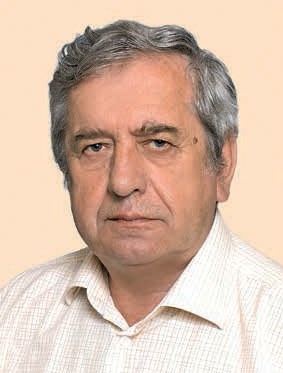
Taras Danylych
Taras Danylych biography
Taras Danylych is an artist whose art is deeply imbued with love for his native land. Danylych’s paintings form a visual chronicle of life in Transcarpathia: everyday life, people, rituals, colorful landscapes, and ancient traditions.
Summary of Taras Danylych
He is a People’s Artist of Ukraine (2017), a laureate of the regional fine arts award named after Y. Bokshai and A. Erdeli (1996, 2009, 2015, 2017), and a member of the National Union of Artists of Ukraine. The artwork of Taras Danylych is held in various museums across Ukraine.
Biography of Taras Danylych
The artist was born on March 7, 1945, in the Transcarpathian region. After finishing secondary school, he entered the Uzhhorod School of Applied Arts. Upon graduating in 1964, he worked as a decorative artist and, in the early 1970s, as an art restorer.
He has participated in regional art exhibitions since 1979, and in national and international exhibitions since 1987. His solo exhibitions were held in Uzhhorod in 1975, 1995, and 2005; in Kyiv in 2004; and in Mukachevo in 2005.
The artist continues to live and create in Transcarpathia, celebrating the beauty of his native land.
Taras Danylych’s Famous Paintings: Narrative Realism
Through the language of visual art, the artist tirelessly promotes the traditions of the ethnic groups of the Transcarpathian region, continually discovering new imagery.
Among Taras Danylych’s original paintings are “Fair” (1989), “Wedding in Transcarpathia” (1989), “Christ is Risen” (1994), “Merry Fair” (2003), “Prayer for the Country” (2014), “Stuzhytsia Oak” (2014), “Uzhhorod Fair” (2013), and others.
UFDA has digitized the artist’s work “On the Street” (1987) from the collection of the Borshchiv Regional Municipal Museum of Local History. This work is now available to a wide audience in the highest resolution on the fund’s website.
Taras Danylych’s Art Style
Taras Danylych began his artistic career as a woodcarver. Later, while participating in exhibitions of local artists and under the influence of such masters as Ernest Kontratovych, Andriy Kotska, Yurii Herts, and other prominent representatives of the Transcarpathian school of painting, he began— as he notes in his autobiography— to develop his own distinctive style in painting.
His works, created in oil and tempera techniques, celebrate the nature of his native land and glorify the working individual, whose tireless labor enriches the people and inspires songs and legends. His richly colored canvases affirm a sense of optimism and a bright perception of the surrounding world, as seen through his characters—Lemkos, Boykos, and Hutsuls. Narrative content is one of the defining features of Taras Danylych’s art.
He “humanizes” the landscape: in his paintings, nature becomes an organic backdrop for depicting rural life and everyday scenes. His deep knowledge of the traditional culture of Transcarpathian villages contributed to shaping the artistic and figurative structure of his early genre works portraying the life of highland communities. Danylych rarely depicts a solitary figure; his element is the crowd—the energy of groups, the movement, and the dynamics of collective life.
Taras Danylych is a master of miniature portraiture—each figure possesses its own character and never gets lost among the others. The people in his paintings are mowing, plowing, harvesting potatoes, stacking sheaves, tending sheep and bees, chopping wood, shoeing horses, carrying, transporting, or rearranging things. Even during celebrations, his characters are depicted in lively motion.
A central element in Danylych’s creative philosophy is the archetype of the tree. Christian customs and rituals also occupy a special place in his artistic life, symbolizing the eternal cycle of life. Icon painting is another important chapter in the artist’s oeuvre. His art style could be described as a unique combination of genre painting, folk primitivism, and fairy-tale realism.