
"The Sun Will Soon Appear": Danylo Kovach on Art Between Memory, War, and Disinformation

Lesia Liubchenko

Interview conducted by Lesia Liubchenko, Content Lead of UFDA.
This interview is also available in Ukrainian. Click here to read it.
In a world where images increasingly replace reality, Danylo Kovach's art navigates the fine line between truth and its imitation. His works offer no straightforward answers — instead, they create situations in which the viewer is compelled to determine what is real. From an exhibition in Zaporizhzhia exploring information and manipulation to the Viennese project "THE SUN Will Soon Appear," this conversation spans multiple dimensions of artistic practice: from family memory to the experience of forced displacement, from working with material to reimagining it entirely.
Lesia: Danylo, first of all, congratulations — you recently had two exhibitions, in Vienna and Zaporizhzhia: "THE SUN Will Soon Appear" and "Information/Disinformation" respectively. Could you tell us more about their concepts and ideas? What kind of responses did you receive from audiences?
Danylo: Thank you! These were truly significant events for me, and it's interesting that they coincided: the opening at the Zaporizhzhia Centre for Contemporary Art was on March 6th, and on the 10th — in Vienna at "Die Blaue Galerie".
Starting with Zaporizhzhia — curator Viktoriia Veres and I spent about half a year discussing various details. Most of the projects shown at the exhibition were conceived around ten years ago, and I'm very glad we were finally able to realise them.
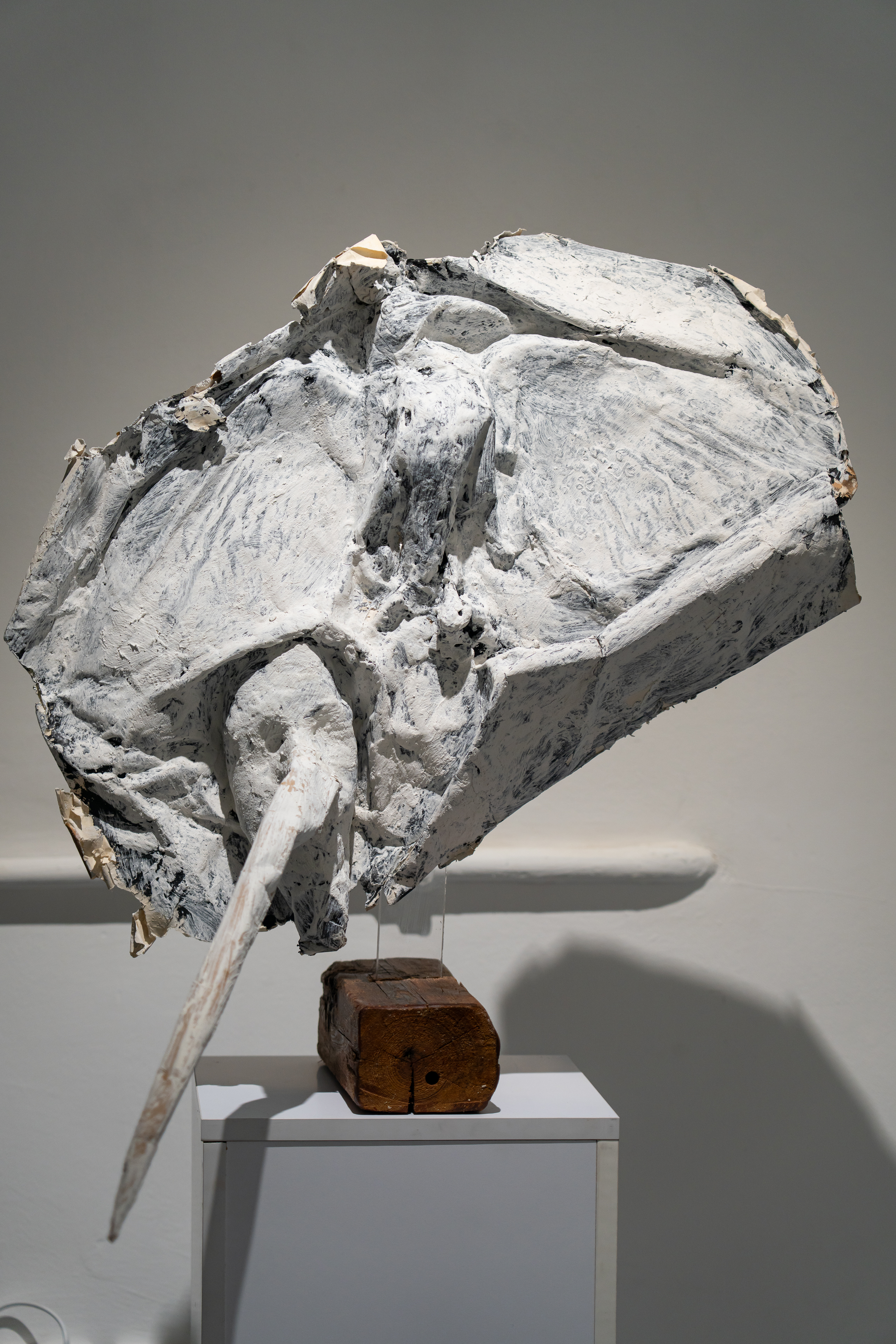
These are sculptures — I showed them all together at an exhibition for the first time. They are masks, casts made from both antique forms and actual skulls and bas-reliefs from the Austro-Hungarian era. For ten years they had been sitting in my studio, slowly maturing. Once I moved to Vienna, where I now live, I finished working on them and sent them to Ukraine.
I'm also very grateful to my colleague, artist Yuriy Yefanov, who helped me realise a video work. It depicts a typical landscape — a field of sunflowers against a blue sky, an image reminiscent of the Ukrainian flag. The shoot lasted twelve hours: a time-lapse from sunrise to sunset. Throughout the entire day, all the flowers turned their heads to follow the sun. And in this field of real sunflowers there is one plastic one — visually identical, but opposite in nature: it only imitates life.
The key video work is documentation of a performance in which I plant plastic flowers into a field of living ones. This piece is about how difficult it is in the 21st century to distinguish truth from falsehood, when information is so often used as a weapon — and at the same time, about how important it is to filter what reaches us, and from where.
Lesia: And what about the Vienna exhibition, which featured your linocuts?
Danylo: If the Zaporizhzhia exhibition was united by the theme of "Information/Disinformation", in Vienna it was "THE SUN Will Soon Appear". The exhibition is built around three key ideas.
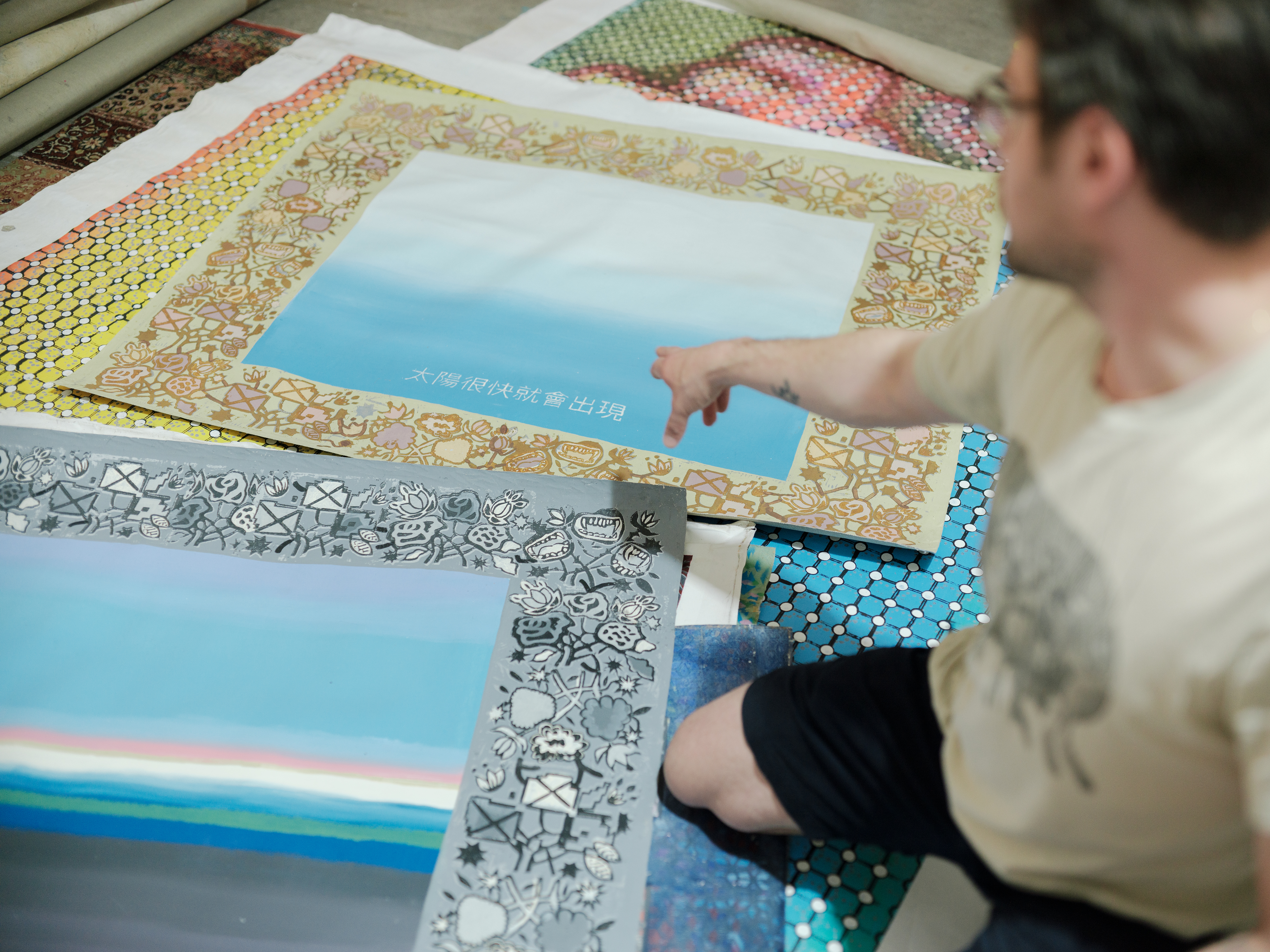
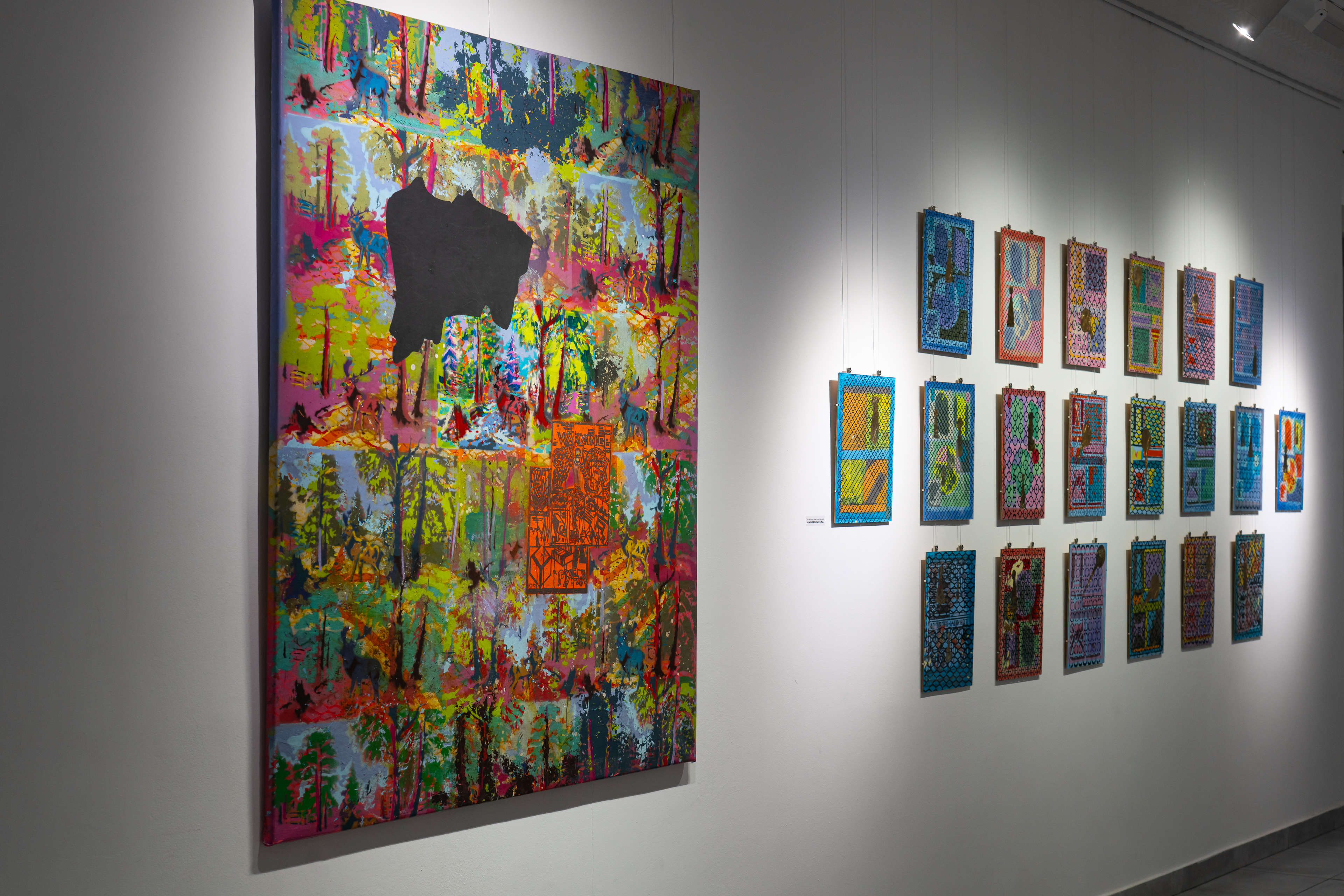
The first is the project "The Sun Will Soon Appear" itself, which I began here in Vienna in 2022. I primarily work with the theme of landscape — in paintings and in video works. This project features a blurred landscape with the subtitle "The Sun Will Soon Appear" written in different languages. The idea is to eventually reproduce this inscription in every language in the world, so it's a long-term project. The central idea is about the possibility of a world without war — about a utopian but necessary desire for peace.
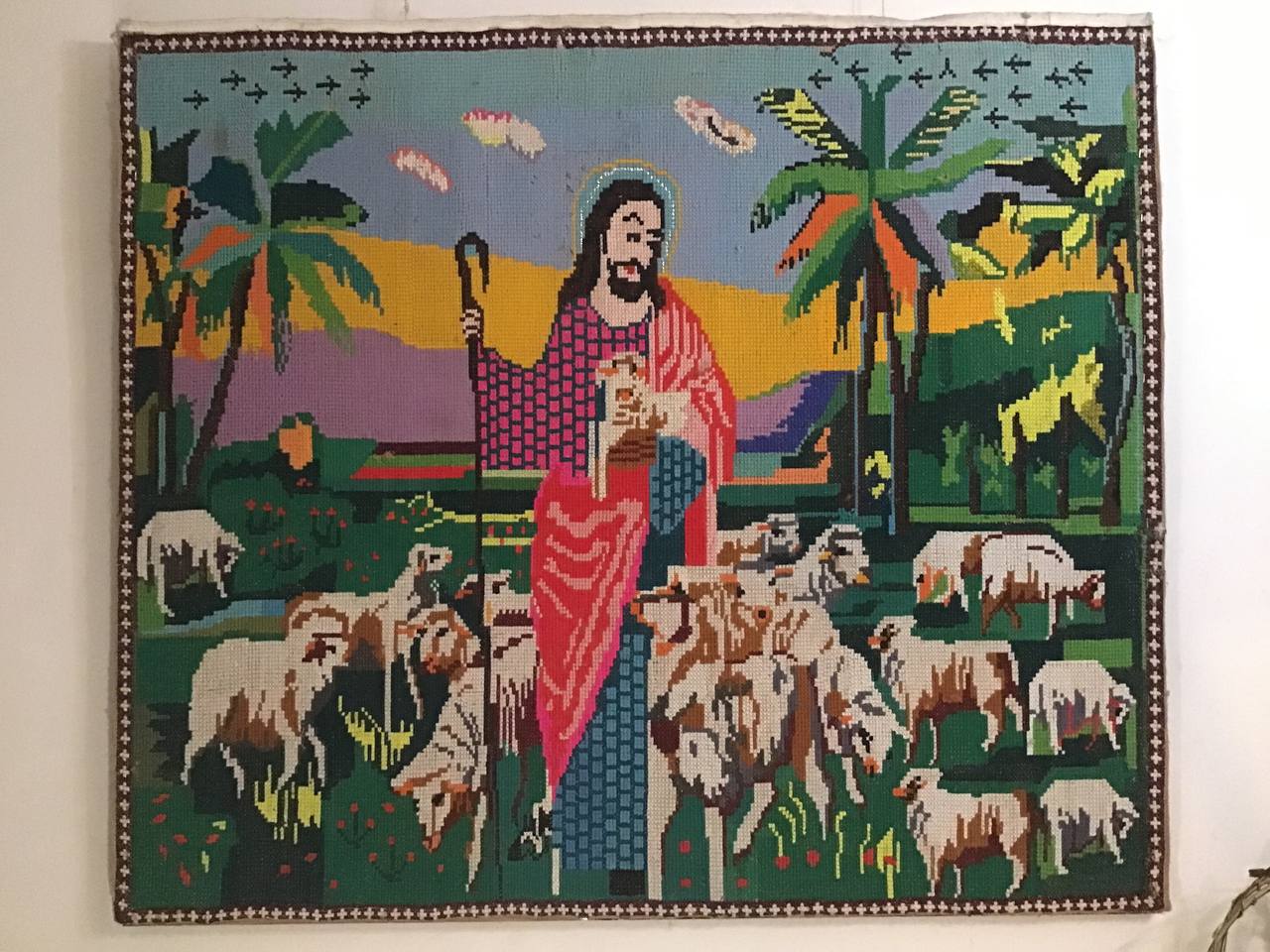
The frame surrounding the landscape is made up of interpreted ornaments from the embroidery of my two grandmothers — one from Zaporizhzhia, one from Zakarpattia. It brings us back to the past, where everything is one way or another connected to wars — both of my grandfathers fought.
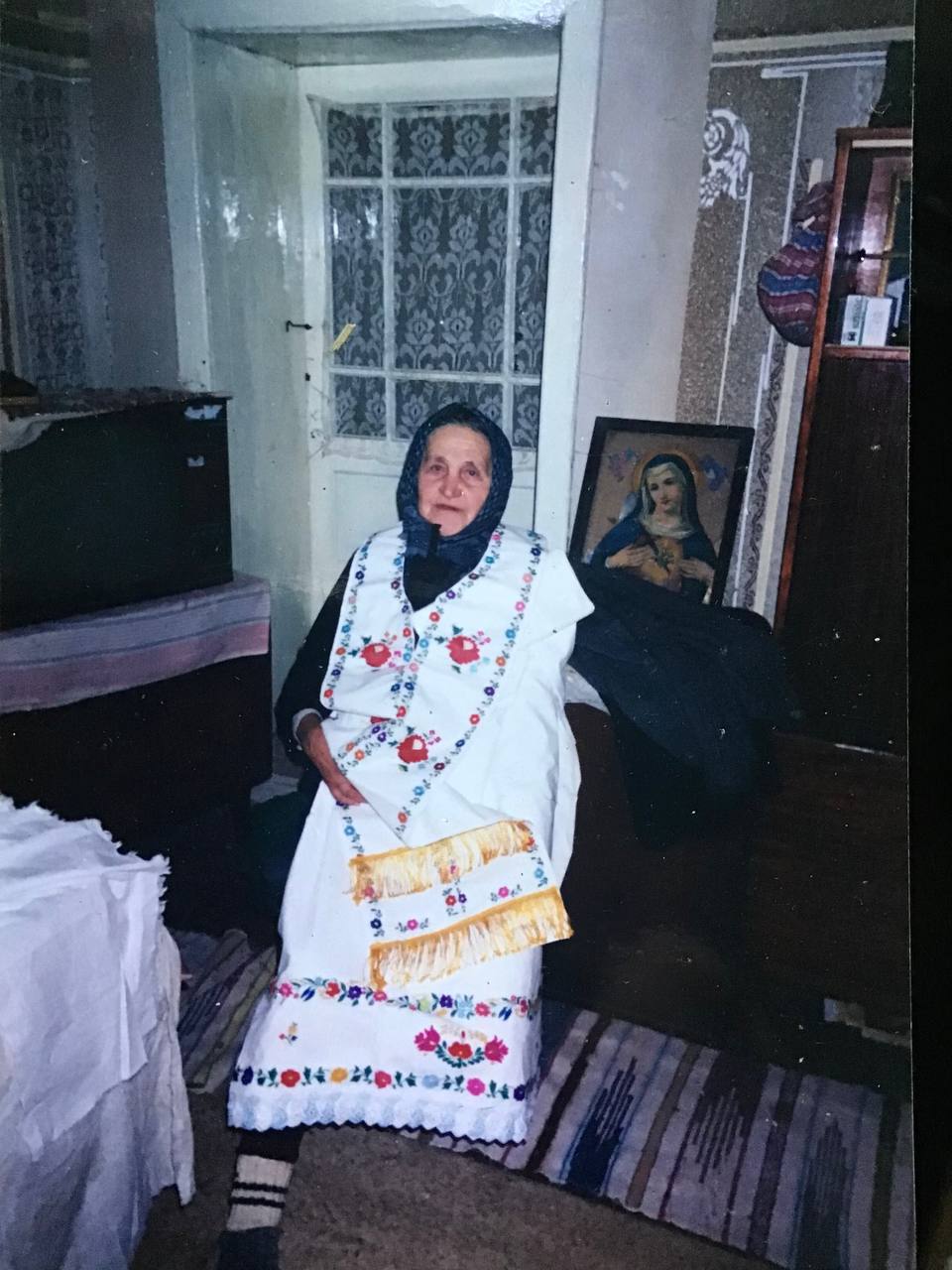
The second idea is connected to the fact that both of my grandmothers worked with textiles and embroidery. In the 1970s, the motif of "A Deer in the Forest" was very popular. My father, Pavlo Pavlovych Kovach, worked in a workshop that produced decorative rugs and wooden sculptures — eagles, bears. These were the first decorative artworks to appear in my grandmothers' homes. They were mass-produced on such a scale that every household had something from that workshop.
For me, this is a kind of Soviet pop art — without a named author, without a brand, accessible and cheap. A playful aside: Andrii Varhola, better known as Andy Warhol, was working in the very same years, but with elements of American mass culture. I think that if Warhol's parents had not emigrated to the United States and he had stayed in the Lemko region — literally ten kilometres from where my grandmother lived — he might have created paintings similar to what I make today.
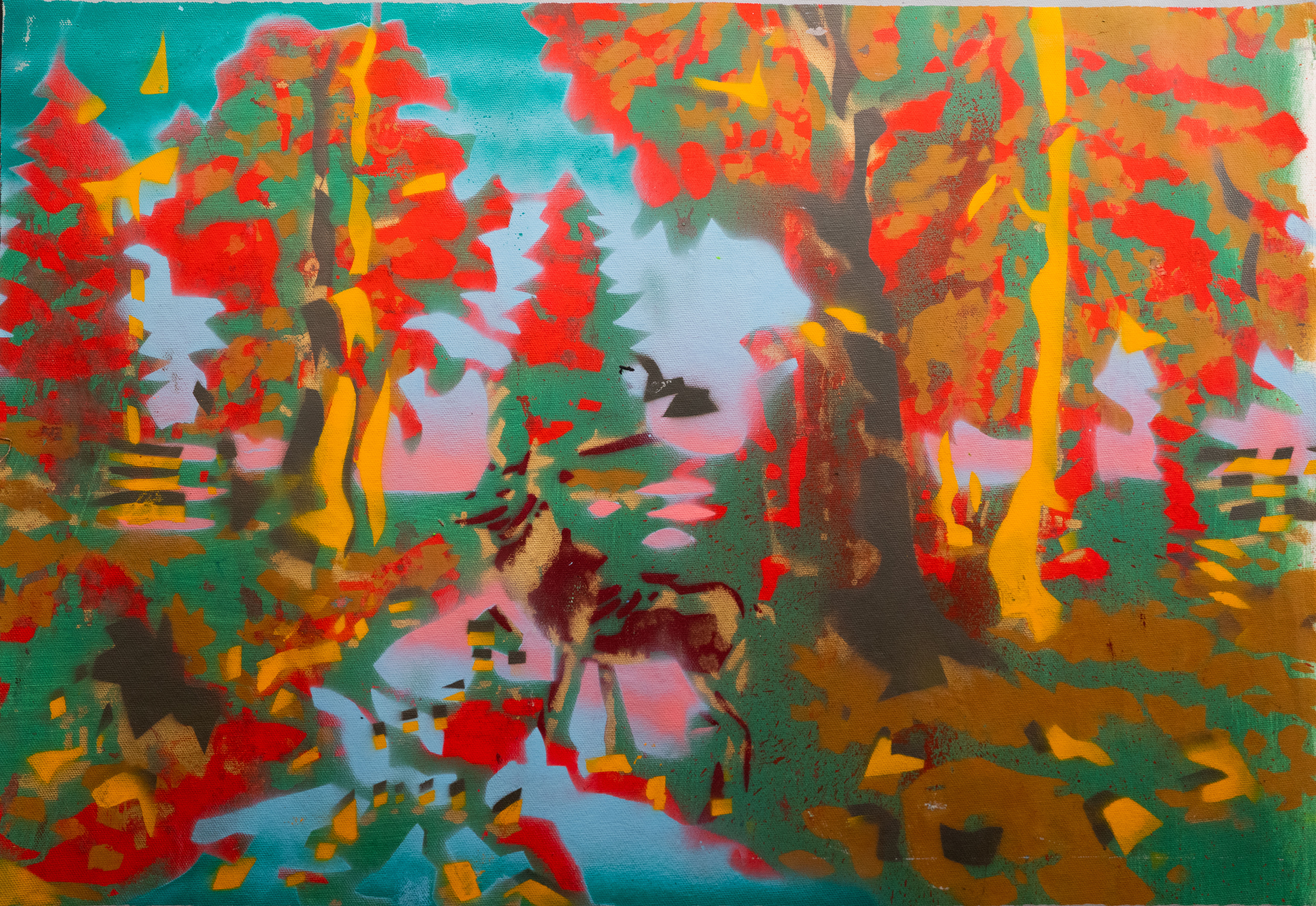
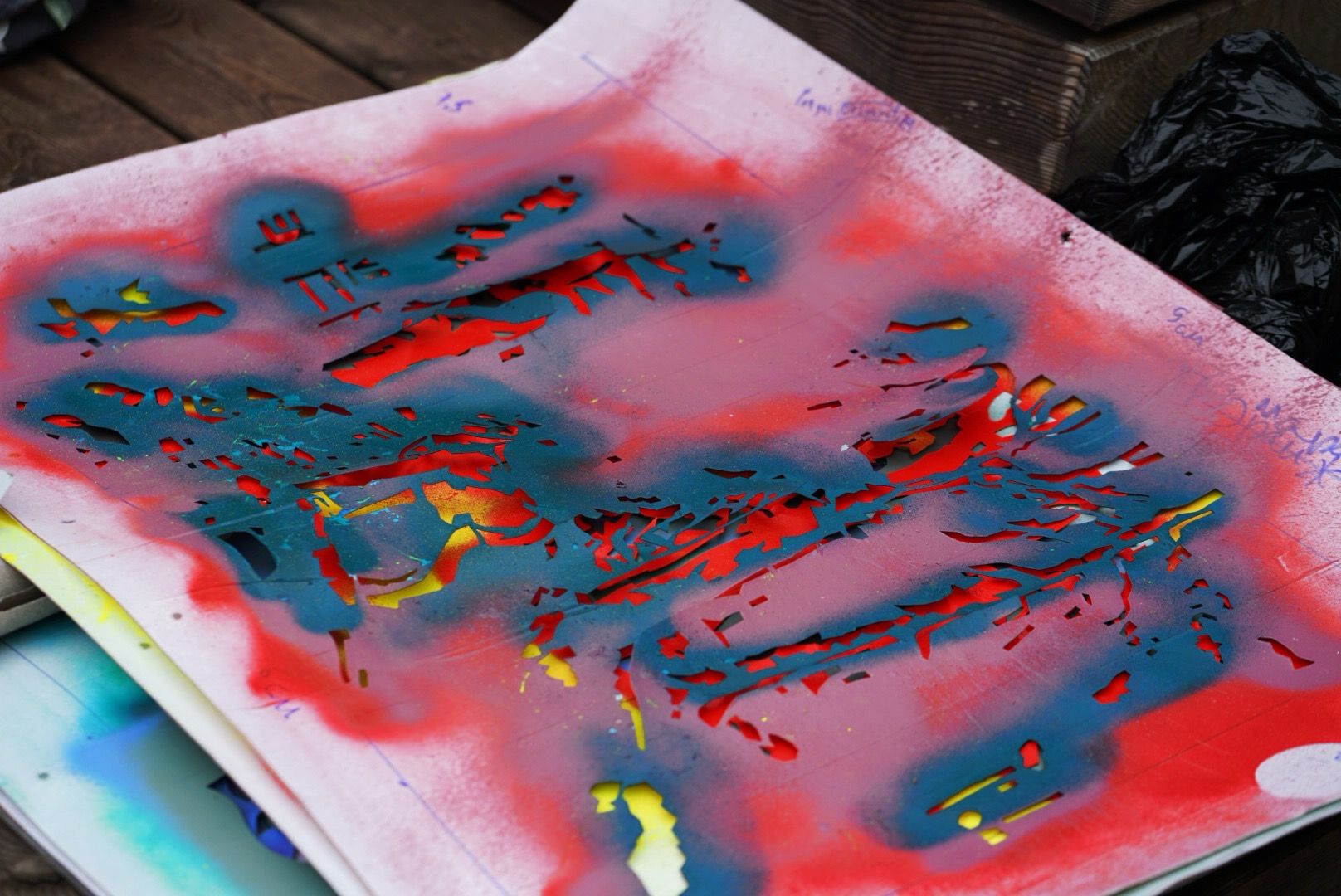
After a group exhibition in New York, organised by Oleksandr Prokhorenko and featuring one of my favourite artists, Maia Haіuk, I learned that one of my paintings had been acquired for their private collection by an influential contemporary artist whose practice is fundamentally based on stencils.
This event inspired me greatly, and I continued the series. According to unofficial accounts, what motivated their choice was precisely the concept: using layered Soviet templates in a manner contrary to the political meanings, moral and aesthetic dogmas of that time.
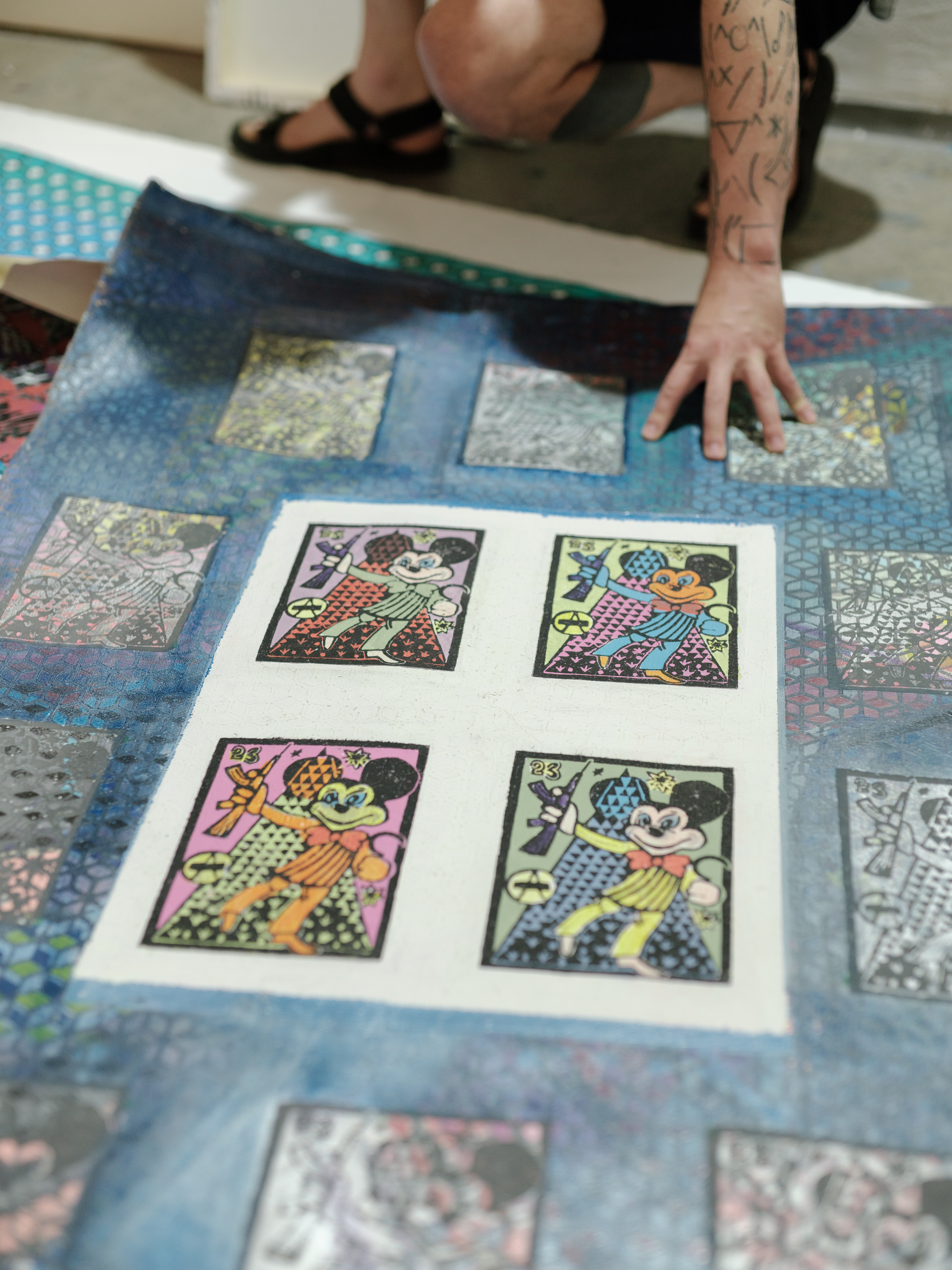
Working with the "deer" motif, I use the same templates and stencils but radically change the colour — and this opens up a new perspective, new meanings, and a new context for experiencing these works. It is also a kind of manifesto against the Soviet era, when creative self-expression was impossible and all nonconformists faced trouble with the authorities.
My father in Uzhhorod has a wonderful collection of works by Zakarpathian artists of the sixtiers generation — Pavlo Bedzir, Liza Kremnytska, Ferents Seman. He knew them personally, and they often spoke about how they felt the pressure of the authorities of the time.
The third idea is a kind of remix of my grandmothers' work. Using linocut and layered stencils, I reflect on their creative legacy — these visual canvases are in some sense a collaboration with their artistry. Their embroideries were one of the few expressions of creative freedom in a difficult time. They are powerful, vivid, colourful, eight-bit images — predominantly on religious themes.
Lesia: You've touched on something very interesting. Two seemingly opposed systems — totalitarian and capitalist — but the same era, and still something in common, including in art.
Danylo: Yes, it's fascinating. Each stencil is a separate colour, and the layering is the same method Warhol used in his silkscreens. A very similar technical approach.
Lesia: You're not afraid of experimentation — you work with sculpture, video art, installation, and land art. But linocut and monotype seem to remain closest to you. What draws you to these techniques, and what can they express that painting, for instance, cannot?
Danylo: I think of myself as a multidisciplinary artist and I value the experience of different practices — performance, which I've been doing since 2014, and sculpture, for instance. In Lviv, I spent three years studying woodworking. In total, I have ten years of formal training: monumental painting at the Adalbert Erdeli Uzhhorod College of Arts, where I was directly influenced by my teachers and by the Zakarpathian school of painting, and sacred monumental art at the Lviv National Academy of Arts. I also worked on the reconstruction and restoration of frescoes, painted and laid mosaics in churches.
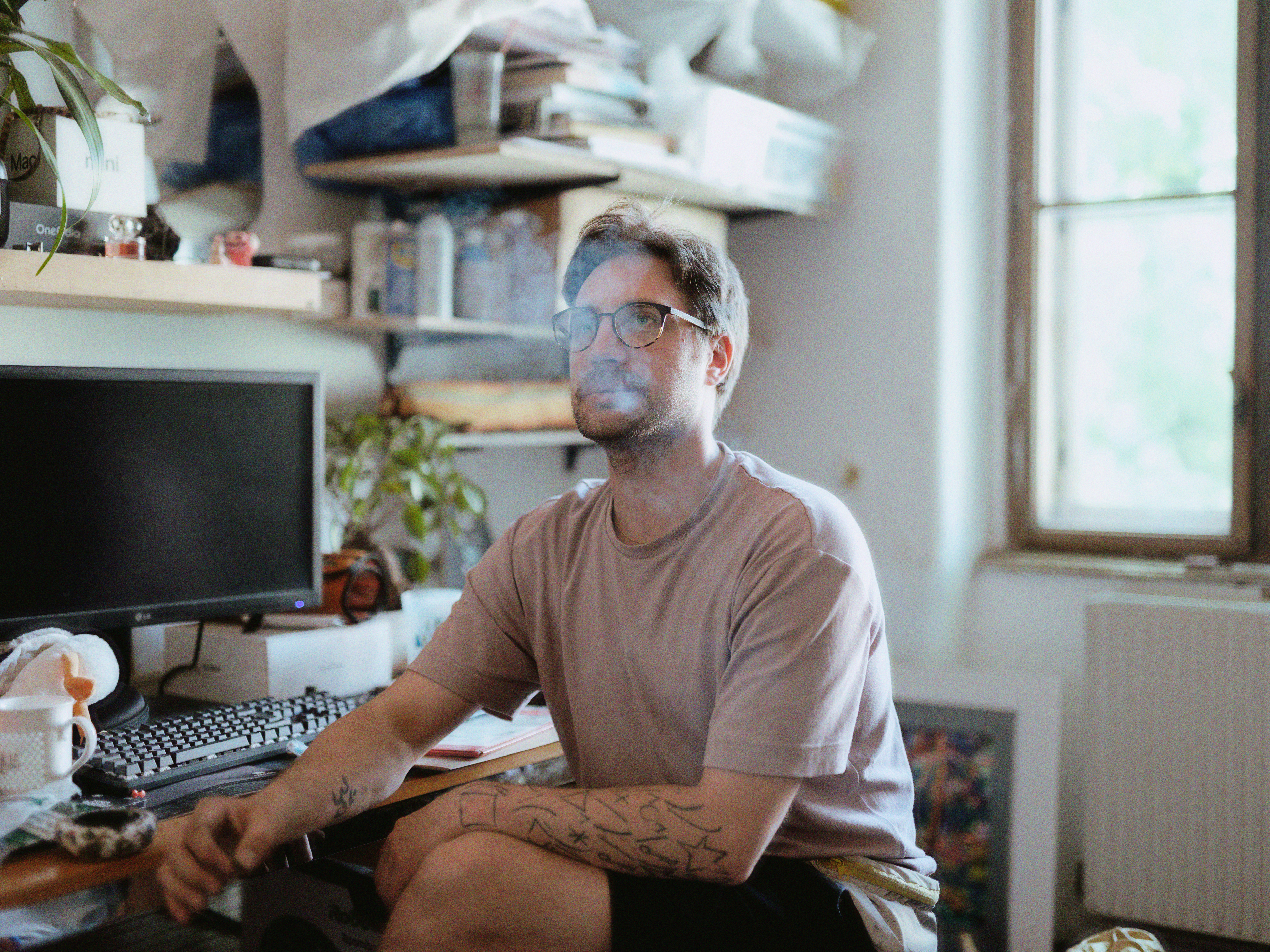
Linocut came on its own — I never trained as a printmaker. It has been the medium I've worked with throughout my entire artistic practice. My main source of inspiration was working on the printing press that my father had inherited from Pavlo Bedzir. When I was a student at the college, I could spend days without leaving the studio — printing and experimenting constantly. Experimentation is an inseparable part of my practice. Through it I discover new technical possibilities: starting with rough exploration, which gradually develops into a particular technical approach through the refinement of nuance.
Lesia: The Zaporizhzhia exhibition featured graphic works, canvases, video art, photo wallpapers, and abstract sculptural forms as a kind of tangible embodiment of myths. Visitors were invited to construct their own stories around these objects. How important is that process of co-creation with the viewer to you?
Danylo: Participatory practice is a very interesting form of communication. At the exhibition there is a large printed photograph from the performance — about 3×1.5 metres — where people can try to identify which flowers are artificial and which are real. It creates an interactive element. But the thing is, they're almost impossible to tell apart, because they look identical.
In the sculptures and objects, I found and brought together things that could never coexist — that would never have crossed paths. But placed side by side, they form a new story that didn't exist before. I give them a new context, a new meaning.
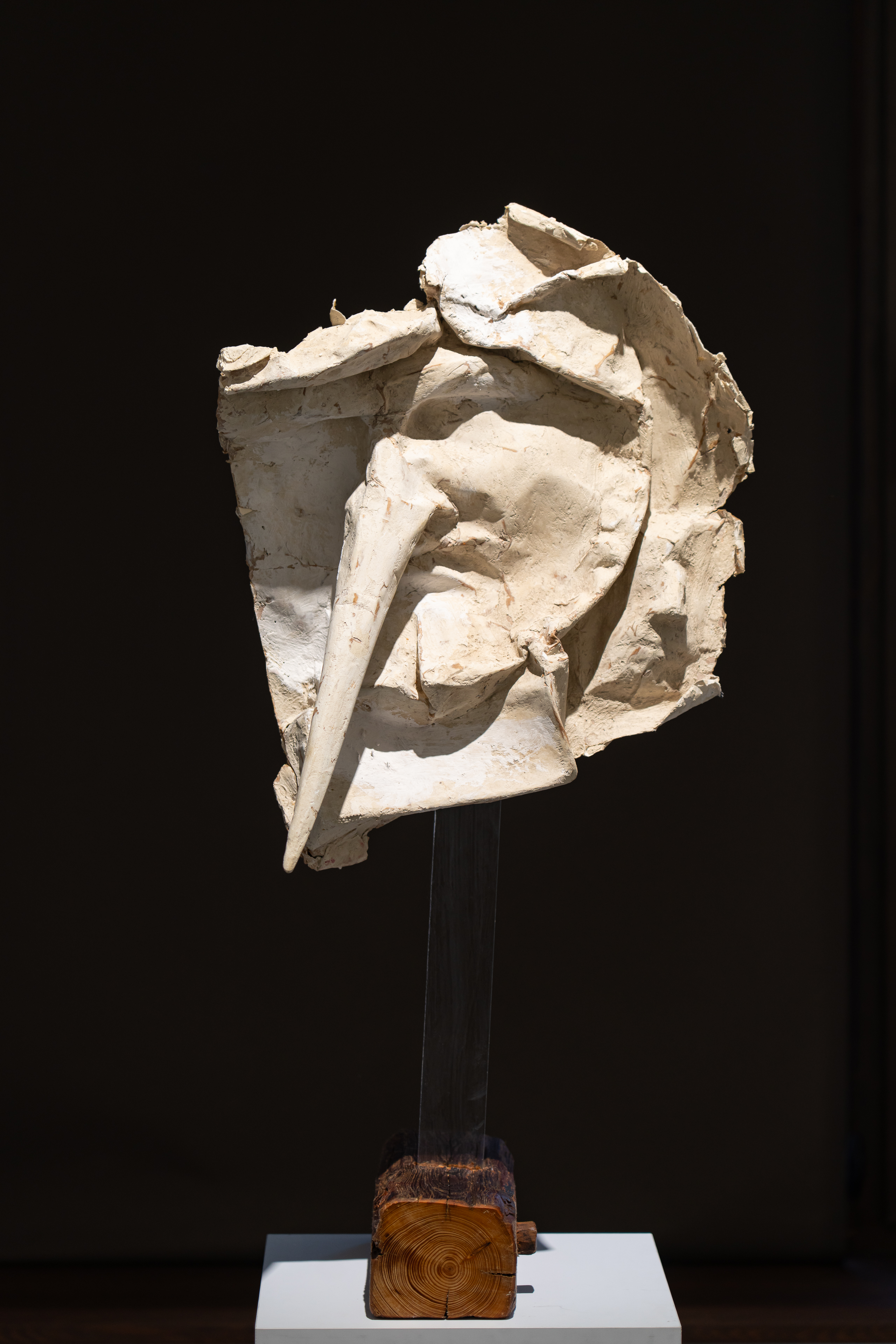
Most importantly: these objects had their own mythology, and my intervention completely transforms it from within. Through visual interventions, the story of the object changes. And each person can reflect on it in their own way and find something personal in these objects — something that resonates on a subtle level.
Lesia: I'd like to move now to how the recurring pattern of a rubber doormat — that transitional object we barely notice in everyday life — came to appear in your work. Could you tell us about that?
Danylo: It's a key object in my practice. It emerged through studio experimentation, when I was working with readymades, with found objects — for example, Coca-Cola cans flattened by a truck. I would print them on the press. And over time, I began to think about the mat differently too.
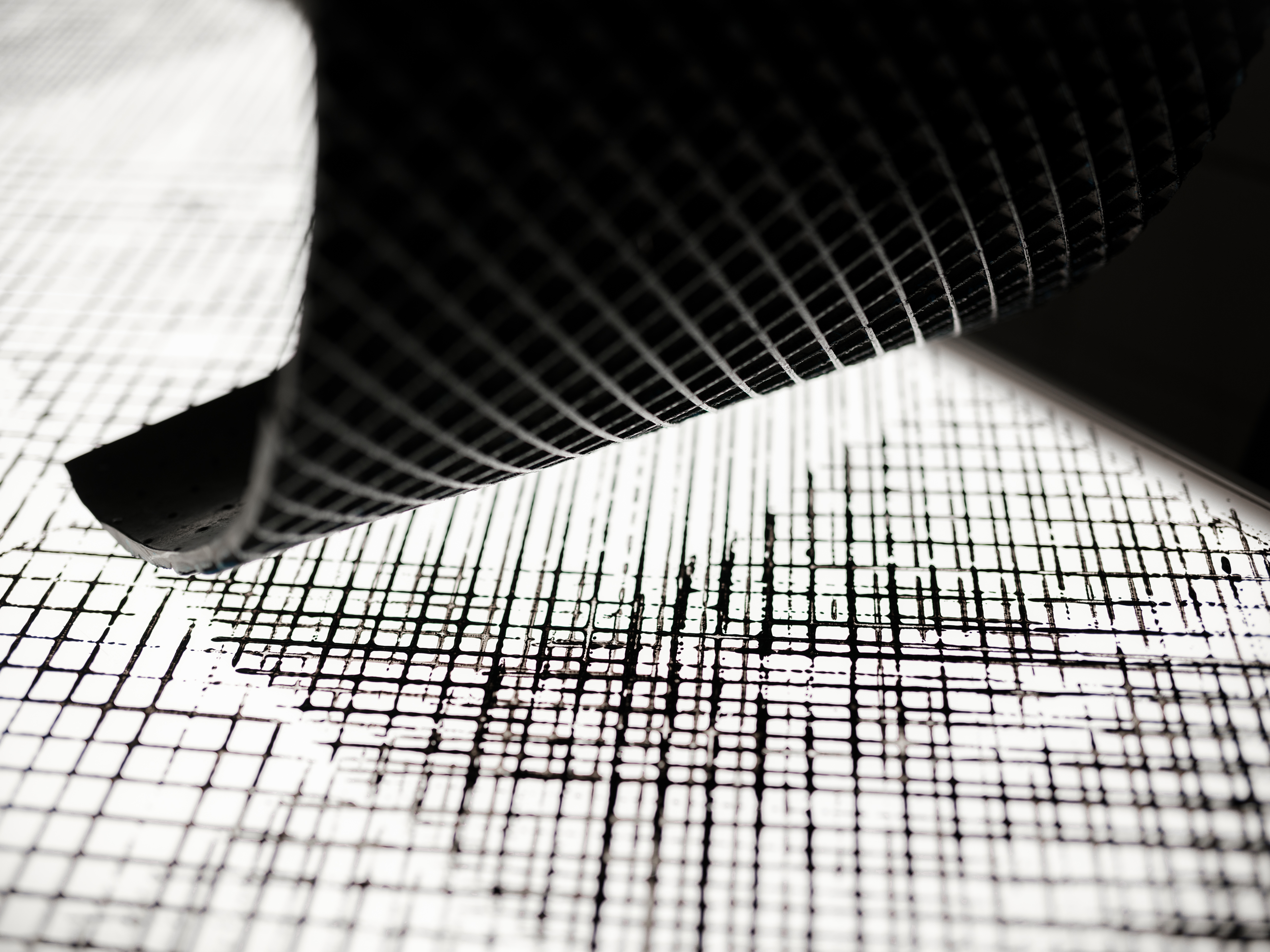
For example, during a residency in Chernivtsi — curated by Voldemar Tatarchuk, Oleksandr Sushynskyi, and Maria Ahisian — what mattered to me was the specific location: which building or institution these mats were placed in front of. I chose the theme of Soviet repression, and in particular how it had affected the Armenian church, which had been closed for many years. At the time, weapons were stored inside.
Lesia: That's quite a typical situation with churches — they were used as warehouses.
Danylo: Yes. I took the mat from the entrance of the church and created from it a monumental canvas, 3×2 metres — a loosely suggested blurred landscape that, from a distance, resembles the Armenian flag. In the foreground — a repeat pattern, a kind of grid made from the mats. That painting is now in a private collection.
That was one of my first projects of this kind. At first it was more of a use of the readymade, but over time I came to understand this object more deeply. A mat on a threshold is a symbol of hospitality: it's where friends, acquaintances, family come in — those we are glad to welcome.
One of my projects that functioned as a total installation was realised in Innsbruck, Austria. It was curated by Hermann Glettler, an art historian and bishop who occasionally curates exhibitions in churches. My friend Tomáš Hažlínský came from Berlin to do a sound performance. I also want to thank Anastasiia Diachenko and Brigitte Egger, who helped enormously with the realisation of this installation.
I spoke with refugees, with people who had experienced forced displacement. Together with a lawyer, I drafted a document that both parties — myself as the artist and the person being interviewed — had to sign. All interviews were anonymous; we talked about both positive and negative experiences of living in Innsbruck. For my part, I rented the mat from the entrance to each participant's home and committed to returning it. Around 20 conversations took place, and people brought me their mats, from which I built a room. Walking into that room, visitors could read the interviews translated into three languages: Italian, English, and German.
Lesia: You're referring to the project "Welcome"?
Danylo: Yes. It's inseparable from the context: invaders broke into our country and have been destroying Ukraine for four years now. Truly terrible things are happening. And it was important to me to give voice to people who experienced this firsthand.
The need to speak about war through art also lies at the heart of another, quite difficult project — created in collaboration with my brother, the remarkable artist Pavlo Kovach Jr., as the outcome of the "Scattered Seeds" programme. We realised it at a gallery connected to the "Assortment Room"; it was curated by Alyona Karavai and Benjamin Gruner. Pavlo is currently serving in the military, with a very demanding role in civil-military cooperation — specialised units of the Armed Forces of Ukraine that facilitate interaction between the military and the civilian population.
In our collaborative work, Pavlo's video — in which he washes his vehicle clean of his comrades' blood — is projected onto a wall made from approximately 25 different mats that I created for the installation.
A small spoiler: I received a grant from "Documenting Ukraine" to realise an exhibition in Vienna — in the former Semmelweis hospital. In September, Pavlo and I plan to show there together.
Lesia: We've already touched on the theme of war. Could you tell us where you were at the start of the full-scale invasion?
Danylo: It's not a simple story — as it isn't for any of us, though I experience it on a different level. I essentially didn't hear any sirens — literally one day before the full-scale invasion began, I left the country with my family to visit my wife's relatives. At that point, Dzvinka was pregnant. We left, and the war started. When I saw NATO soldiers as we were crossing the border, I understood that it might actually happen. And now I've been living in Vienna for four years.
That's precisely why the exhibition in Zaporizhzhia means so much to me — I was born there, and my grandmother is from there. All the themes I work through are, in one way or another, connected to Ukraine. It's important to me to illuminate the crimes being committed through the lens of art. It is a powerful way to speak and to be heard.
Lesia: Your colleague Kateryna Lysovenko, who also lives in Vienna, said in our conversation that for an artist with an established practice, this kind of relocation may have been harder than for a young person just beginning their path and searching for ways to express themselves. What difficulties did you encounter? And what brought you to Vienna specifically?
Danylo: The decisive moment was when a collector who had been buying my wife's paintings wrote to say she had a free apartment — and that if we needed it, we were welcome to come. And we generally felt that in the art community there is a particular kind of trust. For example, a local artist, Kristina Werner, was leaving for a three-month residency in London and simply handed us the keys to her apartment in the city centre. She said that if we needed it, we could stay there — even though we had only just met her.
We experienced that kind of generosity more than once. There were also unpleasant moments — mostly personal, but not without political undertones. Overall, though, I feel solidarity and support, including from the Ministry of Culture — there are many opportunities at various levels, both for collaboration and for presence in the local cultural space.
Ukrainians are scattered across the world right now, but we are like fungi — connected by a fine mycelium that can stretch tens or hundreds of thousands of kilometres. The theme of empathy and shared feeling is deeply painful, but a sense of belonging becomes precious in dark times.
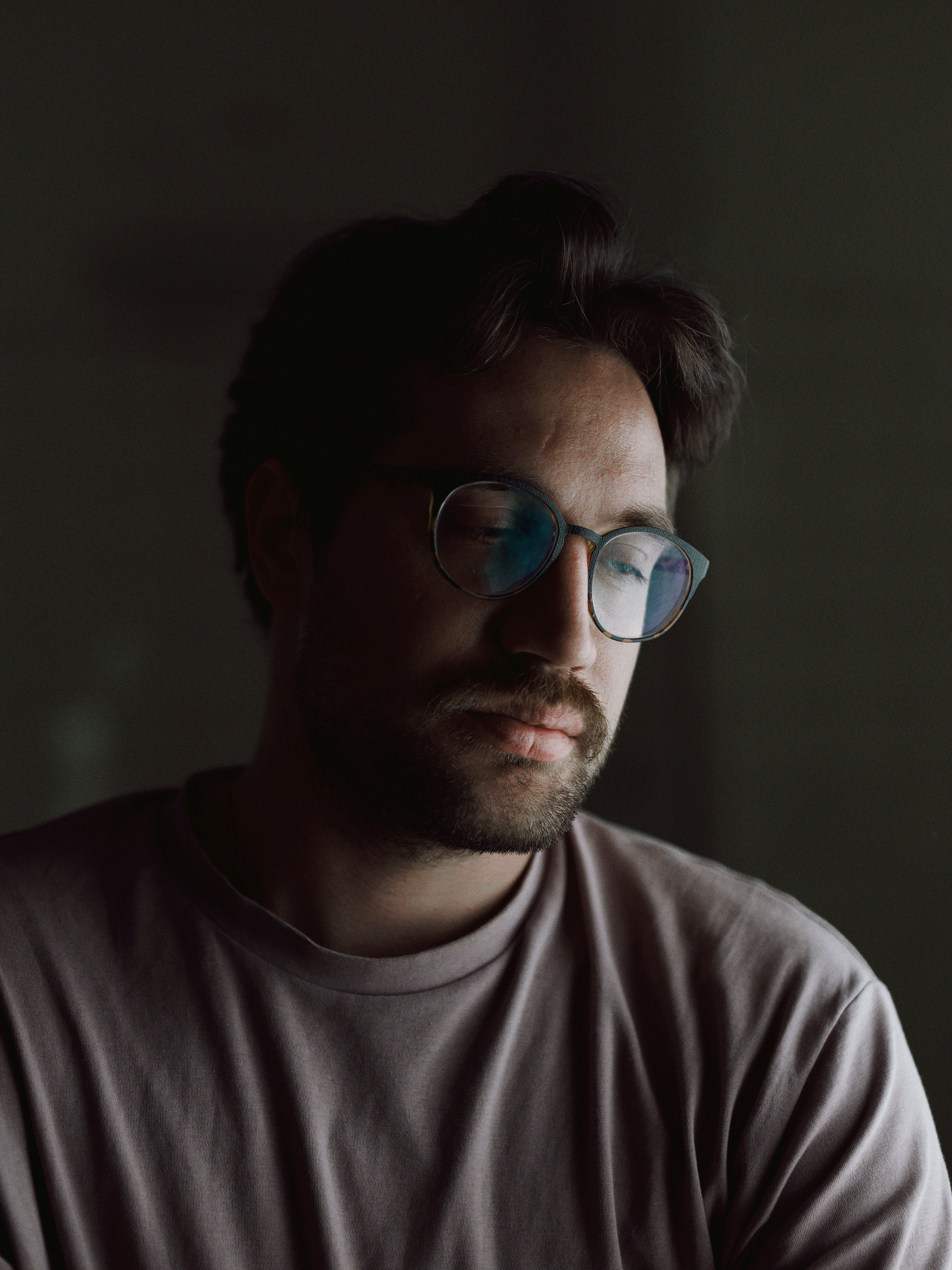
Lesia: In the summer of 2024, something quite dramatic happened: the basement of the building where you were living flooded, and most of your works from the past few years were damaged. How did that experience of loss affect your relationship to your own work and to the artistic process more broadly?
Danylo: Yes, I was devastated. The basement wasn't mentioned in our rental agreement, so we had no grounds to make a claim against the landlords. Where the water came from remains a mystery — a somewhat mystical moment.
Everything my wife and I had made over two years — what we had shipped from Ukraine and what we had created here — ended up underwater. Most of the works were on paper, since I had been primarily working in that medium when printing linocut series. They hadn't even been shown anywhere.
In response to this event, I initiated a curatorial project, which I realised in the basement and the apartment where we were living at the time. We co-curated it with Yehor Antsyhin, and Mark Chehodaiev took care of much of the technical work. The exhibition brought together graphic works, painting, five video works, and a performance. Many interesting artists took part, including Attila Hažlínský, Oleh Perkovskyi — both of whom are now serving in the Armed Forces of Ukraine — Mykola Karabinovych, and German artist Lena Dobner.
I chose loss and the destructive force of water as the theme of the project. Each artist reflected on this in their own way — there were playful works too, such as those by Yurii Bilei, very satirical in nature, as a counterpoint to the broader questions the exhibition raised.
After this situation, my wife and I were actually given a studio, which was a relief — we had nowhere to dry our work. We were carrying enormous canvases out into the park to dry in the open air. Fortunately, it was summer. Most of the works, however, could not be saved — they became mouldy. And now I'm making sculptures from those damaged pieces. I haven't exhibited them yet, but it's a kind of recycling — giving them new life.
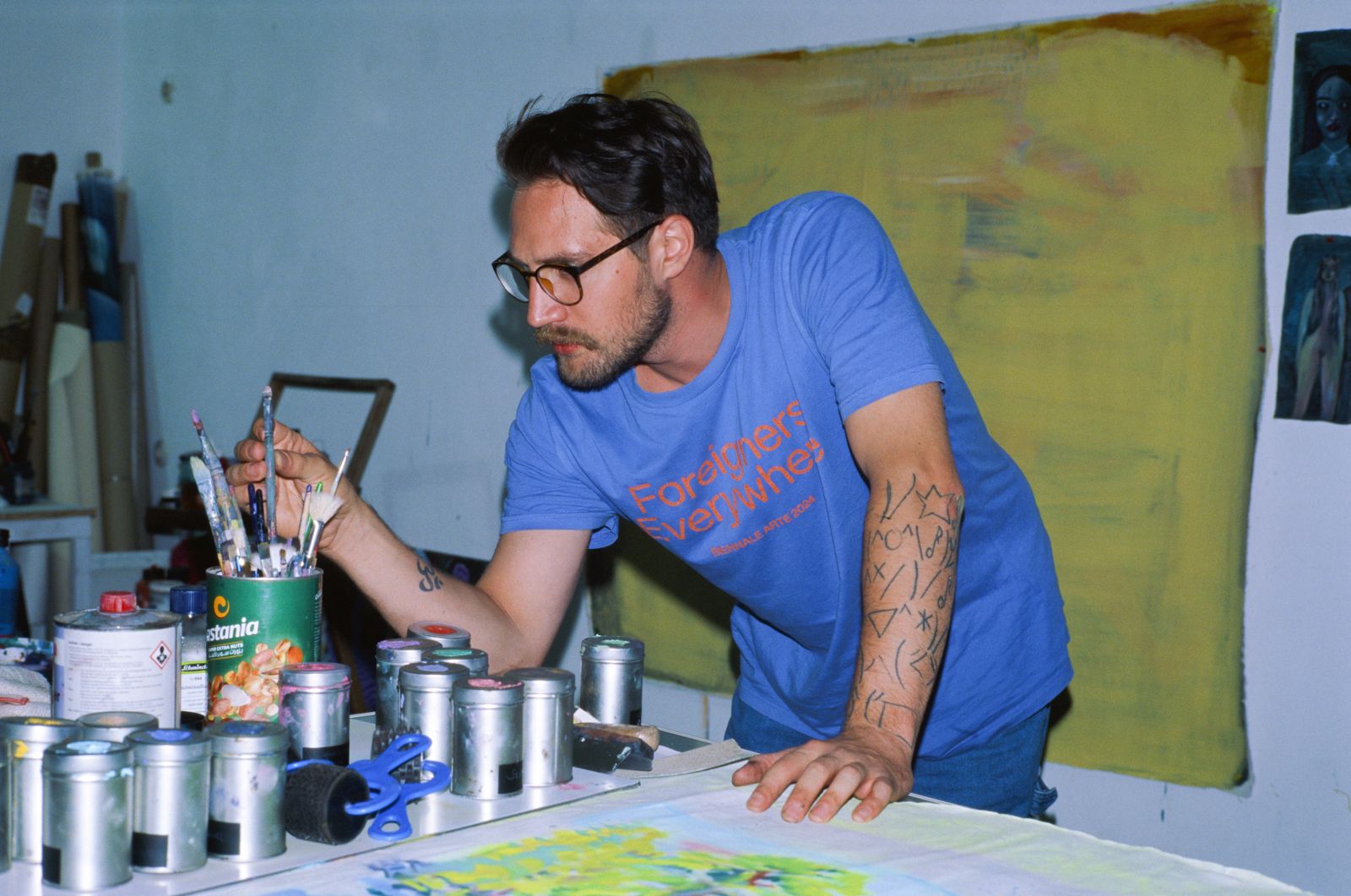
Lesia: In your post about the flood, you mentioned Gerhard Richter and John Baldessari, both of whom made radical breaks with their early work. Perhaps that was your way of taking a more philosophical stance on the situation. And yet you haven't entirely parted with those works — you're still making sculptures from them.
Danylo: Yes and no — what changed more broadly was my relationship to paper as a medium. It began to serve as material for sculpture. Now I work on canvas as well, and I also use graphic methods. A total break, by the way, is itself a radical gesture — in Richter and in Baldessari alike.
Lesia: In your view, can artistic projects by Ukrainian artists — including your own — influence how European audiences understand the war in Ukraine? Do you feel this topic is gradually fading from attention?
Danylo: There's no simple answer — it's a question that requires deeper examination. But what's interesting, for instance, is that at the opening of the Vienna exhibition there was an entirely new audience, people I had never crossed paths with before. To me, that suggests there is genuine interest — both local residents and Ukrainians came.
Lesia: In your joint interview with your brother Pavlo for "Suspilne", published in September 2025, you spoke about different experiences of living through the war — one of you serving in the Armed Forces of Ukraine, the other a refugee abroad. Your brother's experience clearly shapes the way you think about the war. How does that find expression in your work? Has anything changed in terms of ideas, or technically — your approach to colour or materials, for instance?
Danylo: Video art has become a new and compelling medium for me — I hadn't worked with it so actively before. My palette, though, has always been bright — I haven't changed it, even though we are living through dark times and most artists have moved toward the achromatic colours of mourning.
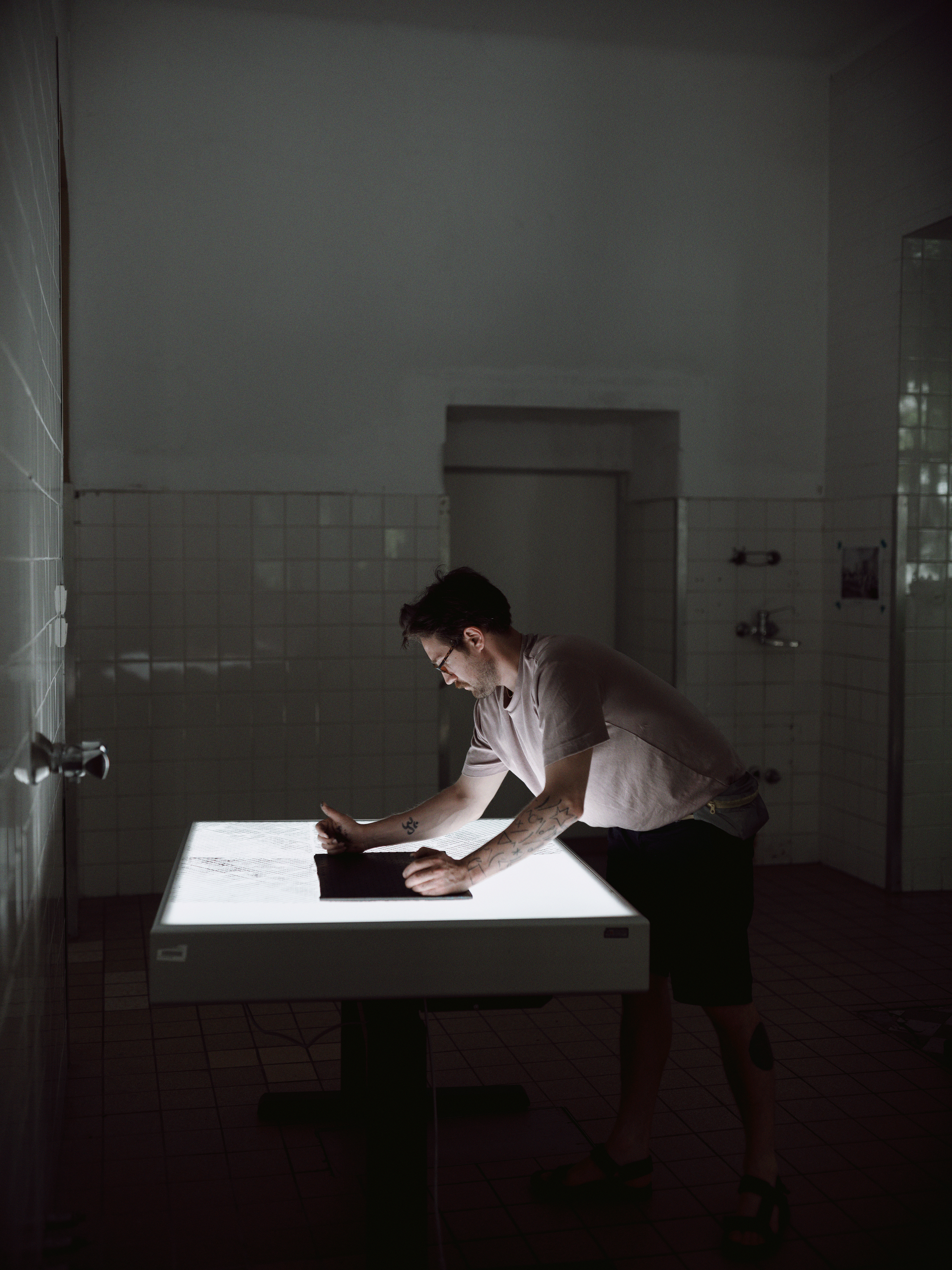
Some things come, some things go. When the war began in 2014, I worked extensively with performance and travelled to festivals. The central theme was intervention — invasion. I no longer work with performance now, but I've transformed its documentation into video art. I also want to mention that curatorial work has become something I feel close to.
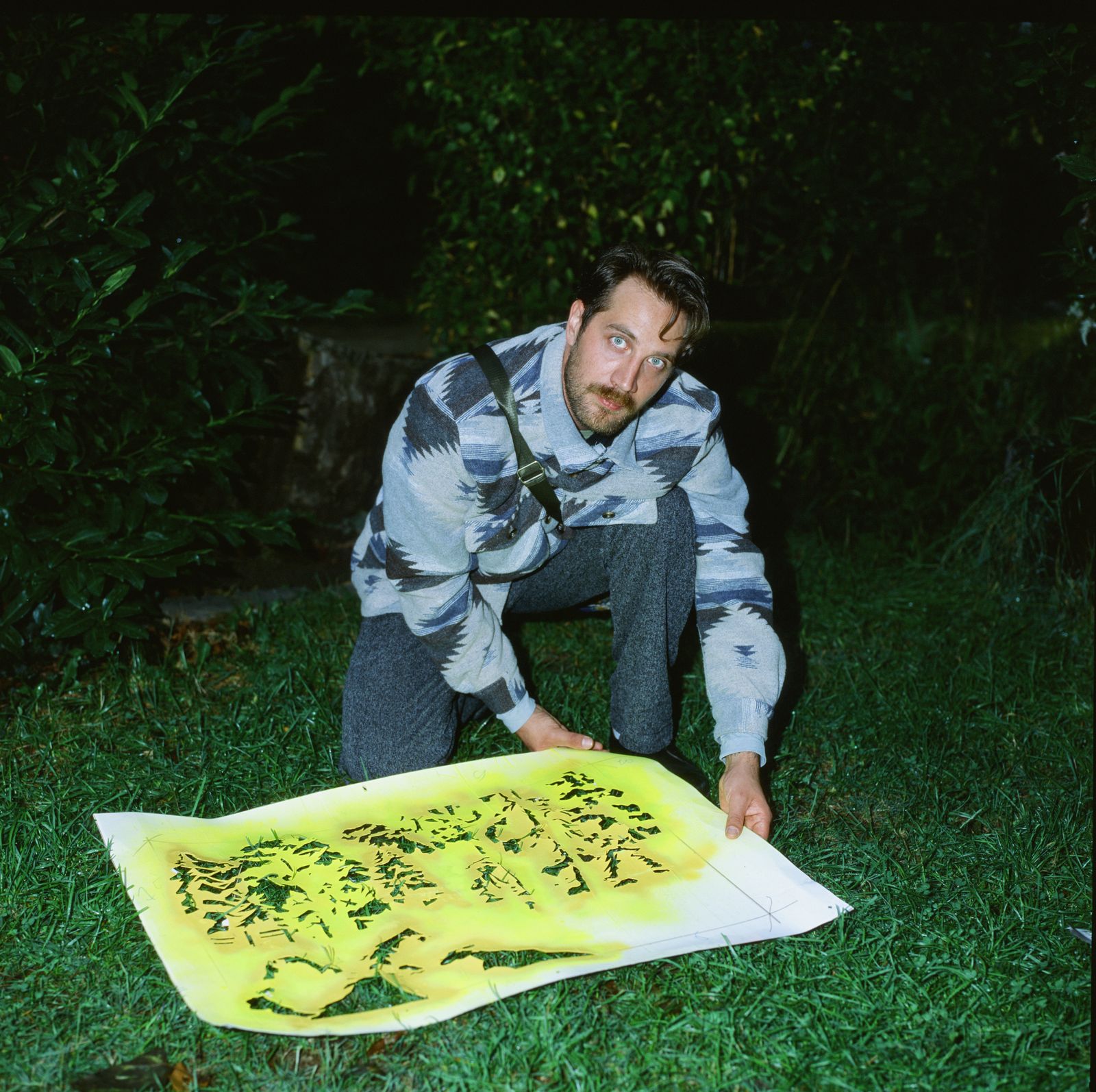
Lesia: Does it interfere with artistic expression, or does it support it?
Danylo: It varies. It's demanding work: it shifts your focus, requires a great deal of time and energy. But I do it because it also matters. A large project recently concluded in Sankt Pölten, where I represented Ukrainian artists in "Posthuman" — a project that brought together over 30 artists from Switzerland, the United Kingdom, and Austria, including figures such as Erwin Wurm.
The curatorial team of "Videocity" comes from various countries, and we continue to collaborate. I'll also be presenting Ukrainian artists in Switzerland. In "Posthuman" these were Vitaliy Shuplyak and Anna Manankina — and I plan to expand the list going forward. It's a very meaningful experience.
Lesia: You grew up in a creative family. Your father is a well-known artist, your brother became an artist, and your wife, Dzvinya Podlyashetska, is also an artist. How does this family dynamic show up in everyday life and in your work? Did you ever feel pressure to follow this particular path?
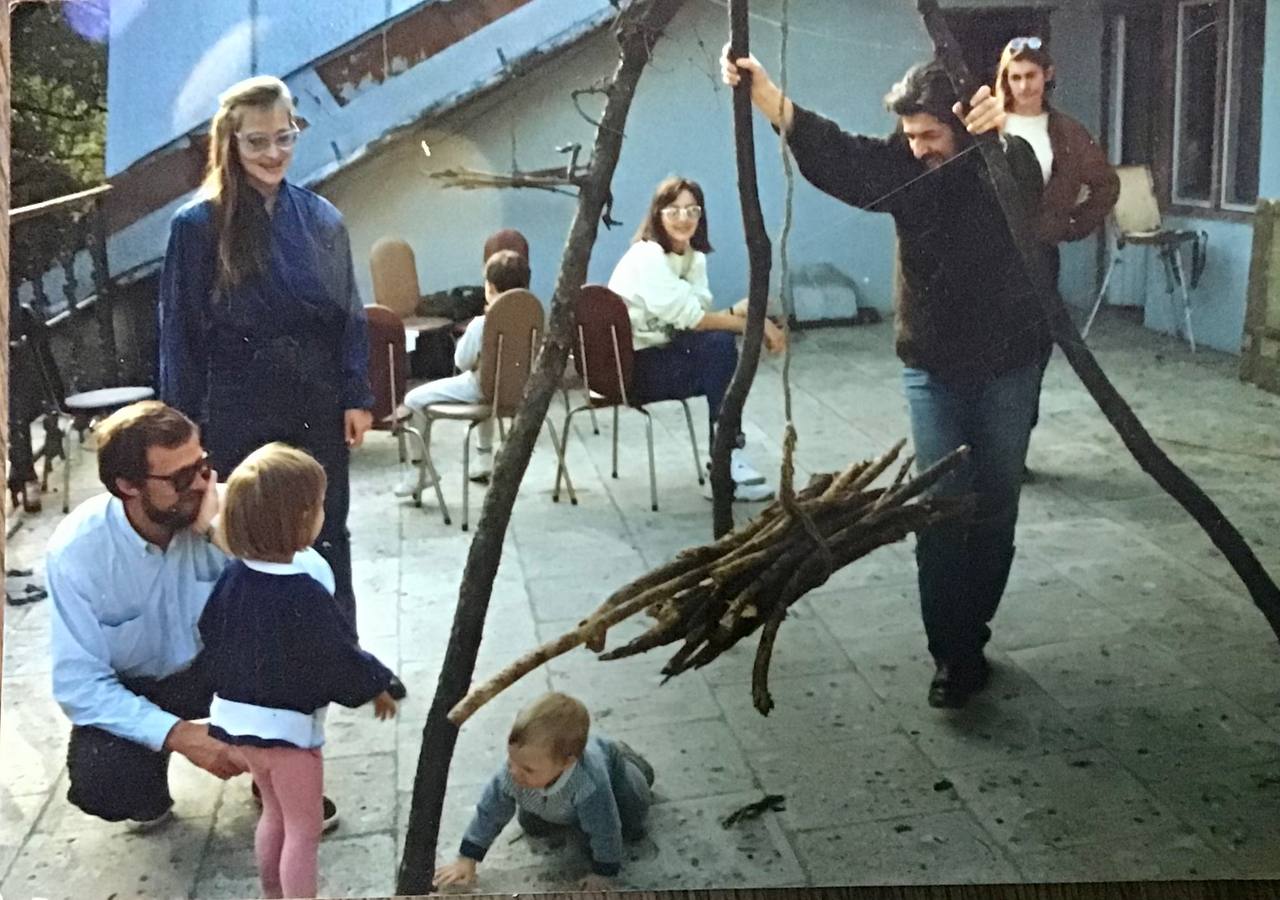
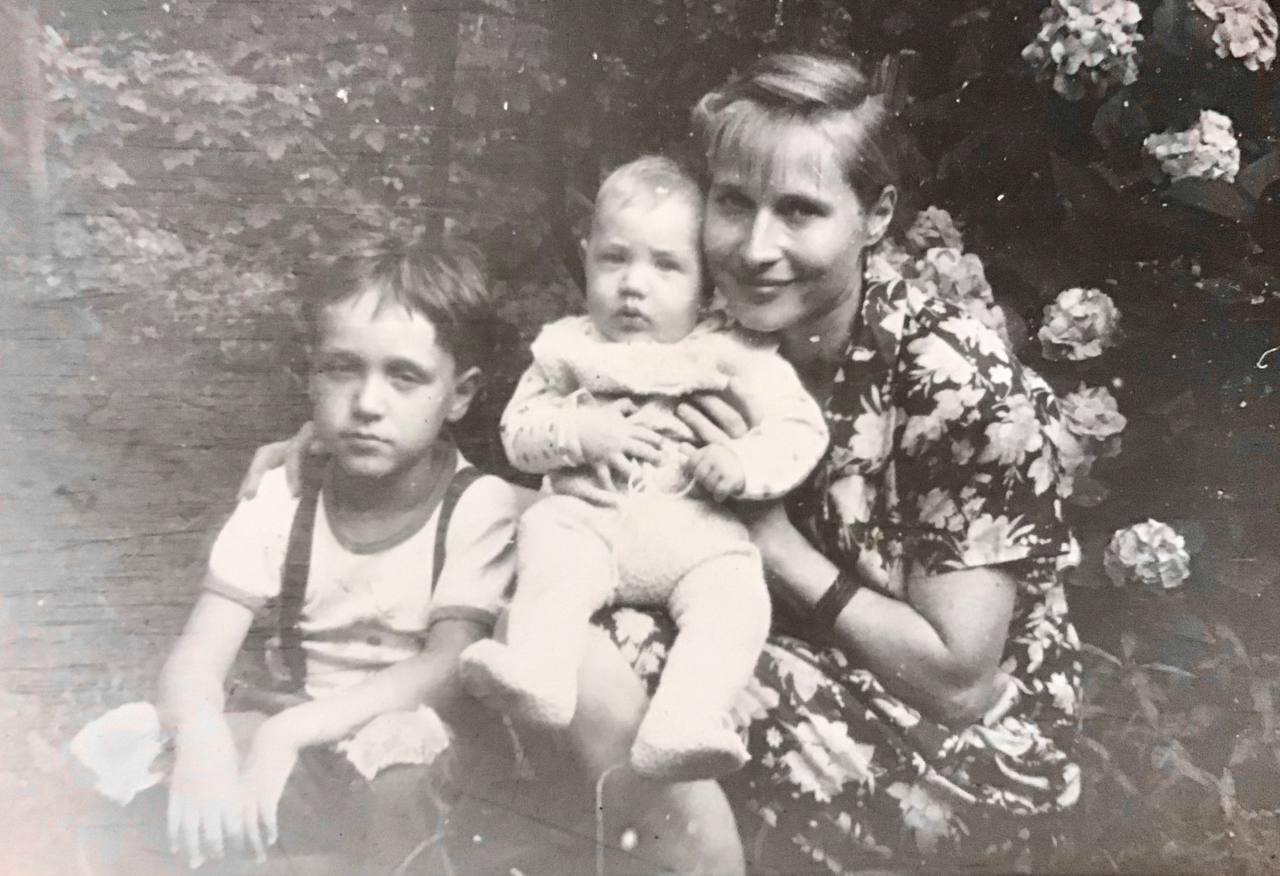
Danylo: I didn't have a choice [laughs]. Because it showed itself from very early childhood — you can even see it in photographs. At the "Zhyvopysnyi Zapovidnyk" ["Picturesque Reserve"] in 1994, my father was making performances and working on canvas, and I was crawling around beside him. We went to every symposium together. At school, I drew on the desks at the back of the room — and nobody even said anything. Everyone already understood what was coming.
At the same time, it wasn't easy, because a narrative already existed. That set its own rules. I have a young son, Adam, who is three and a half, and I'd like him to choose his own path. But when you grow up entirely immersed in an artistic process from childhood — that shapes a great deal.
In our family there is no competition — instead, constant conversation about art, about specific events and meanings. We are, in fact, collaborating as artists for the first time now, my brother and I. Before this, I participated in actions by the "Open Group" — a different language and a different situation.
In my curatorial work since 2012, I've had the opportunity to work at the "Korydor" gallery in Uzhhorod — my father is the initiator and founder of that informal space — as well as at "Detenpyla" and "Yefremova, 26". These collaborations traced a line of informal, alternative expression in contemporary, uncommitted art.
With my wife it's a little different — we share a studio, but we rarely work in it at the same time. The studio is a sacred space for an artist.
My mother is an artist at heart: she realises her creative potential in a garden of flowers rather than with paint. And it's not by chance that I keep returning to the theme of my grandmothers' creativity — more than one generation of our family is connected to art. My grandfather once took part in building a wooden church.
Lesia: You mentioned your son Adam, who was born after the start of the full-scale invasion. Your wife, in an interview with Harper's Bazaar, shared thoughts about changes in her practice — a shift from the therapeutic processing of trauma toward a search for positive values. How has parenthood changed you and your work?
Danylo: My son is my new teacher. There haven't been fundamental changes in my practice, perhaps, but sensitivity shows up on different levels. Adam and I speak Ukrainian together, even though he was born in Vienna. When there's an opportunity, my parents visit. My brother's son Miko was recently born. I'll be travelling to Lublin for Pavlo Jr.'s solo exhibition — I hope we'll meet there.
Lesia: You were acquainted with Pavlo Yuriyovych Bedzir — your father's mentor. Our foundation has also digitised his works. Do you have memories of him from childhood?
Danylo: Yes, of course. He was someone who was entirely present in our family's life and influenced us deeply. One of my most vivid memories: he was the first person to buy my paintings, when I was very young. He paid 25 kopecks per work — which was enough for five pieces of chewing gum at the time. He always came over bringing Coca-Cola for me and Pavlo Jr.
And I can't help but recall his way of thinking, his fascination with Eastern philosophy, his extraordinary sense of humour — he always laughed loudly. His humour was subtle, with a philosophical undertone.
Wherever he was, he always had a pen and a sketchbook in hand. He would talk to people and draw at the same time. His studio resembled Francis Bacon's — a space piled with paintings, books, photographs underfoot and everywhere. Chaos all around, yet clarity and purity in the works: op art and abstraction.
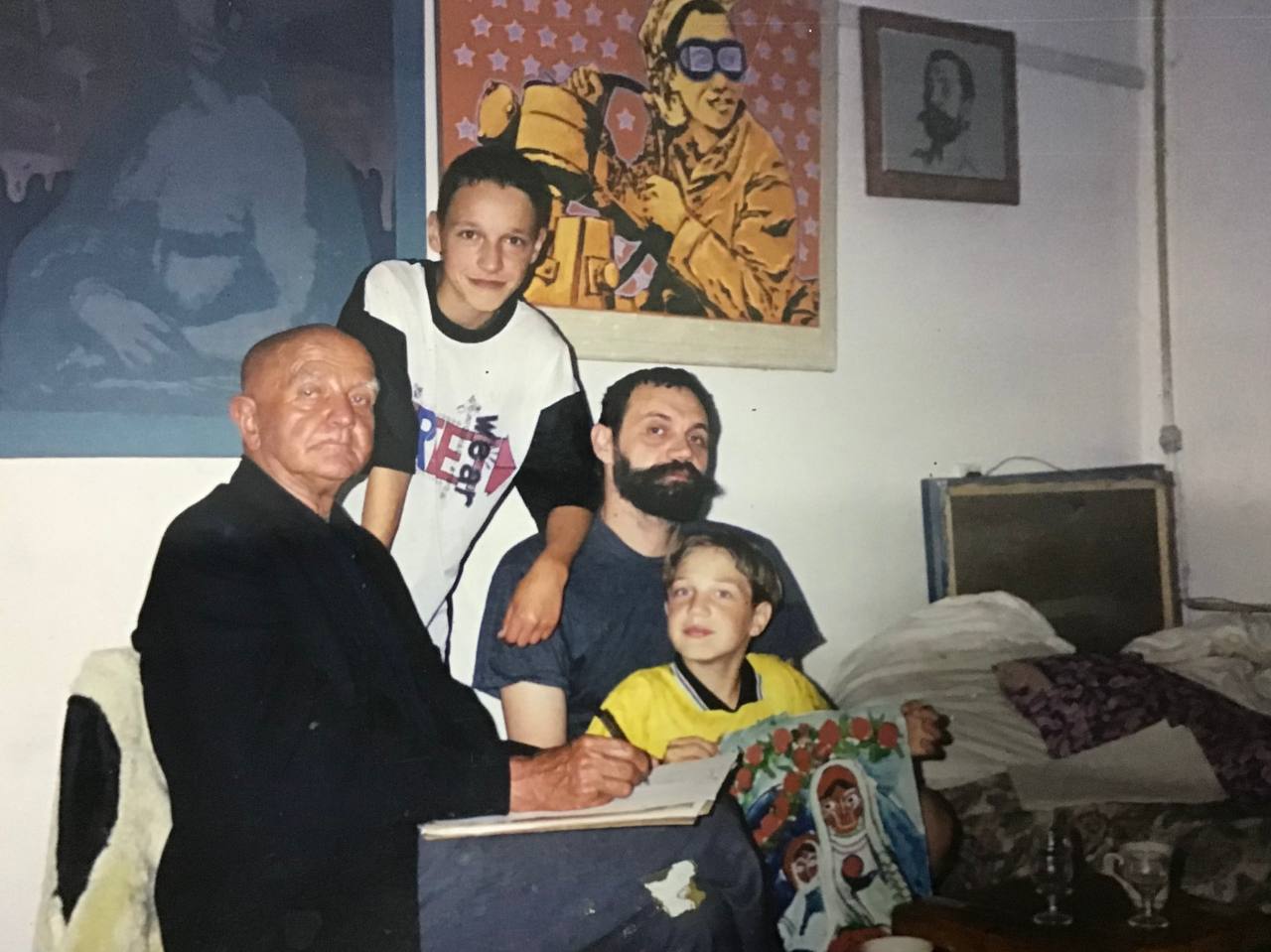
Some of his techniques I still practise and pass on in workshops. For example, the process of first creating chaos through automatic writing. The more chaos you create, the more time it takes to bring order to it. It's a meditative state — you switch off your mind and fill each segment of an abstract form with colour. In the end, something new emerges.
Lesia: Finally, I'd like to ask: over these years — through the full-scale invasion, your relocation, new projects, the loss of works — has your sense of the artist's role in society changed?
Danylo: No, I can't say I've come to think about it differently. If anything, the opposite: artistic practice is a powerful way of expressing ideas — which is precisely why it is both difficult and deeply important.
Want to read the interview with Danylo Kovach in Ukrainian? Click here.