
After the Rain
1988, Painting, Oil, Canvas, Expressionistic Realism
Verified Authentic
This is a Digital Original of the artwork, digitized
using technology, and exists as a unique exemplar.
Each Digital Original is verified and secured through blockchain technology, providing full rights to exclusive digital ownership.
using technology, and exists as a unique exemplar.
Each Digital Original is verified and secured through blockchain technology, providing full rights to exclusive digital ownership.
This artwork is not available for sale at the moment, but you can submit a request to purchase it.
This painting belongs to the collection of the Regional Communal Museum of Local History in Borshchiv, Ternopil Oblast.
- Format Digital Original Standard
- Resolution 407 MPX
- Color depth
48 bit
 281 Trillion Colors
 Original file size
1543 MB DNG File
- Country Ukraine
- Year 1988
- Styles
- Medium
- Physical canvas 70cm x 60cm
- Framing No framed
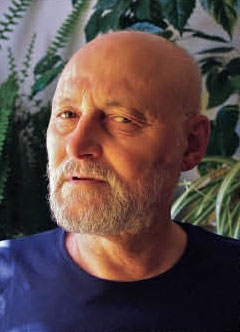
József Rushchak
Born 1943,
Ukraine
József Rushchak was a prominent representative of the Zakarpathian school of painting.
Summary of József Rushchak
His artistic style was shaped under the direct influence of the leading masters of that region, while at the same time he developed his own distinctive and recognizable manner.
József Rushchak’s paintings are held in museums across Ukraine, as well as in private collections in the United States, Canada, Israel, Germany, France, Hungary, and Slovakia.
Biography of József Rushchak
The artist was born in 1943 in the city of Khust, into a large family. His father was a shoemaker who hoped his eldest son would carry on the trade, but József was drawn to art from childhood.
In the neighboring house lived an amateur artist and schoolteacher, Ivan Haidu. Through his friendship with Haidu's two sons, József watched the neighboring artist paint from an early age, and soon took up the brush himself. In the late 1950s, an icon painter named Potapov lived in Khust, who taught József the basics of drawing and painting.
In 1961, the young man began his studies in the decorative ceramics department at the Uzhhorod College of Applied Arts. Significant influence on the formation of his artistic vision was also exerted by the leading masters of the Zakarpathian school of painting — Fedir Manaylo, Ernest Kontratovych, Anton Kashshai, and Volodymyr Mykyta. During that time, József became captivated by oil painting and developed a particular fondness for the landscape genre.
Even while still a student, the young artist began working. He started by painting propaganda posters at a boarding school, and later took a position as a decorative artist at the Borkaniuk Factory. From his third year of study, he was called up for military service. After serving three years, he returned to the college and, upon completing his studies in 1968, decided to remain in Uzhhorod.
From the 1970s, the artist devoted much of his time to plein-air painting, dedicating all his free time to creative work. In 1972, József Rushchak moved to work at the Zakarpathian branch of "Khudozhfond," to which he dedicated over 30 years of uninterrupted service.
In 1987, the artist became a member of the National Union of Artists of Ukraine.
The artist passed away in 2016.
József Rushchak’s Famous Paintings: Color, Light, and the Carpathian Spirit
The theme of Carpathian nature runs as a leitmotif through the artist's canvases. Both panoramic and intimate landscapes — his primary genre — are filled with the horizons of highland villages, picturesque mountains, meadows, and forests.
Among József Rushchak’s original paintings are Lake Synevyr (1986), Kamianka (1995), Morning Dews (1996), Wind (2003), Autumn (2008), Daisies (2011), Light and Shadow (2013), and many others.
UFDA digitized After the Rain (1988) by the artist from the collection of the Regional Communal Museum of Local History in Borshchiv. This painting is now available for viewing on the fund's website.
József Rushchak’s Art Style
The artist's style is distinguished by a bold, saturated palette, characteristic of Zakarpathian expressionism. He worked masterfully with light-and-shadow contrasts, and his landscapes convey a deep, almost tangible sense of color. Rather than fine detail, Rushchak favored expressive color masses that established the unified mood of a composition.
His manner of painting is markedly expressive and impasto in character. The application of paint in thick, rich strokes lends his canvases dynamism and volume. The skies, Carpathian mountains, and highland cottages in his paintings seem to breathe and come alive precisely through this richness of texture.
There is no dry transcription of nature in the artwork of József Rushchak. His style is one of emotional landscape, where, through the state of nature — a sunset, deep autumn, the heart of winter — the artist's inner world is conveyed. The artist succeeded in combining traditional Carpathian ethnographic motifs with a modern vision of form.
His style is, at its core, realist — we clearly see mountains, cottages, trees — yet rendered in the vivid, emotionally charged, and expressive manner of the Zakarpathian school.
- Resolution
- 407 MPX
- Dimensions
- 23296x17472
- Medium
- DNG
- Device
- FUJIFILM
- Device model
- GFX100 II
- Lense
- FUJIFILM
- Lense model
- GF63mmF2.8 R WR
- Color space
- Uncalibrated
- Color profile description
- 48 bit color depth, 281 Trillion Colors
- Metering mode
- Multi-segment
- F number
- 11
- Exposure program
- Manual
- Exposure time
- 0.5
- Focal length
- 63.0 mm
- Photographer
- Digital Original Studio


